
We were instructed by MB Air Systems, an Ingersoll Rand company, to develop Revit templates for the Rolls Royce factory in Chichester. The primary objective was to design a compressed air piping system as part of a wider multi‑contractor BIM model. Our work required full integration with existing Revit models, along with ongoing project support that included clash detection, coordination, and conversion of redesigns throughout the project lifecycle.
Our deliverables for this project were two-fold. For the first two buildings, we began with a preliminary outline of the proposed pipework route received in 2D DWG plan form. These plans had to be re-aligned before being imported into Revit, a process complicated by the need to adjust coordinates to align with existing models already in use by other contractors.
Using a combination of Revit, Navisworks and other supporting software, we created a base model of reference geometry that incorporated architecture, structure, MEP elements and external contractor inputs. This reference model enabled us to design pipework that navigated available routes efficiently and without interference.
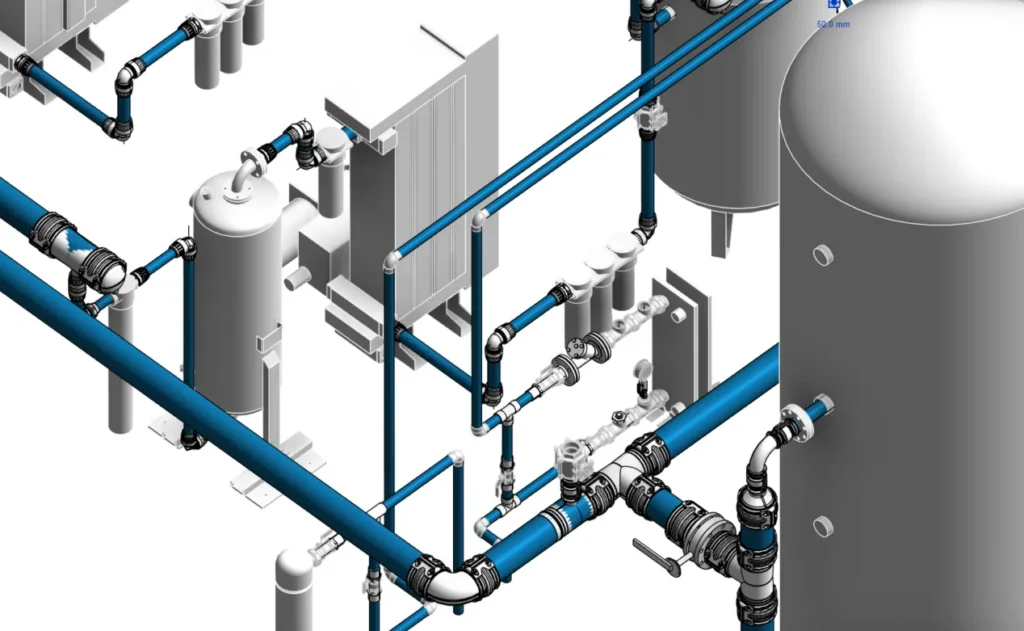
The project required continual collaboration with both the client and other contractors to ensure compatibility across models. Clash‑detection techniques were employed to assess pipe clearance and system integration. Using Navisworks, any clashes identified were exported and distributed to the contractors involved using shared federated models to determine responsibility and resolve issues collaboratively. Our team had to be efficient in resolving clashes to mitigate costs with extra parts when the project broke ground.
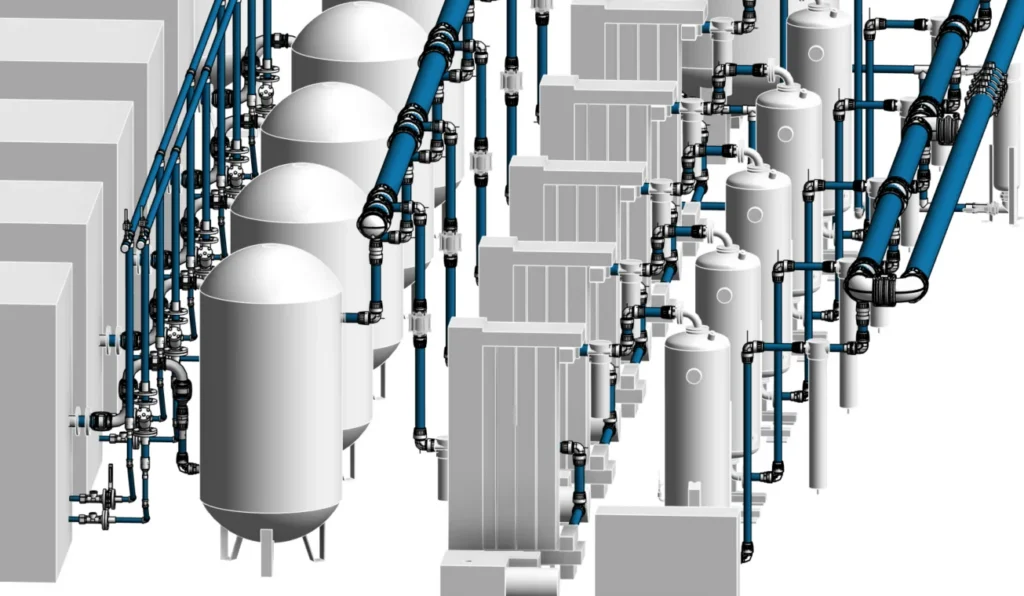
Each contractor was provided with a template spreadsheet of parameters that had to be applied to each component we used in our model, such as the diameter of the compressed air pipe, flow rate and component size.
The third part of the project was a bit different. We were asked to recreate an area of plant room identically in Revit, including equipment, piping, fittings, valves and accessories as the client only had an exported model from a previous project and required a model they could actively use. We were given an STP file which was imported as a reference but as it was not in the right place, we had to use the federated model to locate the area and extract additional files to import and confirm positioning before modelling.
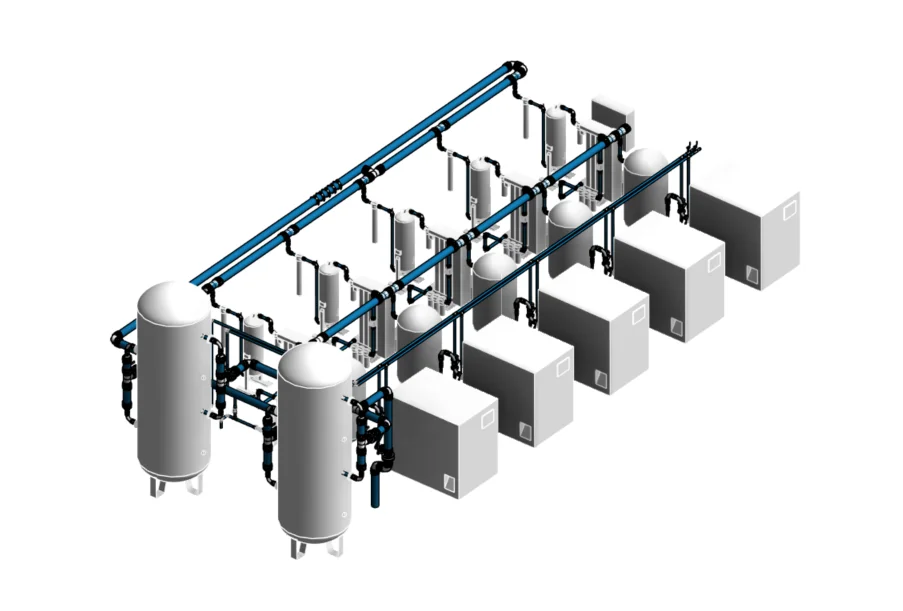
This project was an interesting one to be a part of and demonstrated our BIM expertise as well as highlighting AdaptiveBIM’s capability to deliver coordinated, multi‑discipline models within a complex contractor environment.
If you want to find out more about our Revit modelling, or BIM support, or just chat through your next project, send us an email: info@adaptivesurveys.co.uk To learn more about clash detection, check out our blog!